Participant Project in Theodosius Harbor Archeological Site Architectural Project Competition
Organizer: IBB Istanbul Metropolitan Municipality
Project Location: Yenikapi, Istanbul, Turkey
Project Year: 2020
Published on: https://www.arkitera.com/proje/katilimci-theodosius-limani-arkeolojik-alani-mimari-proje-yarismasi-2/
Design Team: Onursal Engel, Berke Meder, Deniz Akyürek, Merve Özgür
Yenikapı district stands out as a palimpsest piece of city at the southern end of the historical peninsula, where the multi-layered historical topography of Istanbul overlaps. Although it has become an important rail-based transportation transfer center for Istanbul today, the region has always been a place where urban life is intense from the neolithic layers to the port of Theodosius and then to the Langa orchards.
The fact that, land that an urbanite steps on today while transferring from Marmaray Train Station to the metro station, is the same land that the workers who carried cargo to the ships at the port of Theodosius during the 6th century and the farmers who produced crops in the Langa orchard during 16th century demonstrates the palimpsest structure of Yenikapı.
Thus, the main objective of the proposal is to ensure that the traces of different temporalities and historical layers on these lands can become possible to walk among, where different periods overlap each other through everyday life practice.
The fact that, land that an urbanite steps on today while transferring from Marmaray Train Station to the metro station, is the same land that the workers who carried cargo to the ships at the port of Theodosius during the 6th century and the farmers who produced crops in the Langa orchard during 16th century demonstrates the palimpsest structure of Yenikapı.
Thus, the main objective of the proposal is to ensure that the traces of different temporalities and historical layers on these lands can become possible to walk among, where different periods overlap each other through everyday life practice.
Research Based Design
Urban Square Design
Archaeological Master Plan
Process Design
Design Integration To Transit Hub
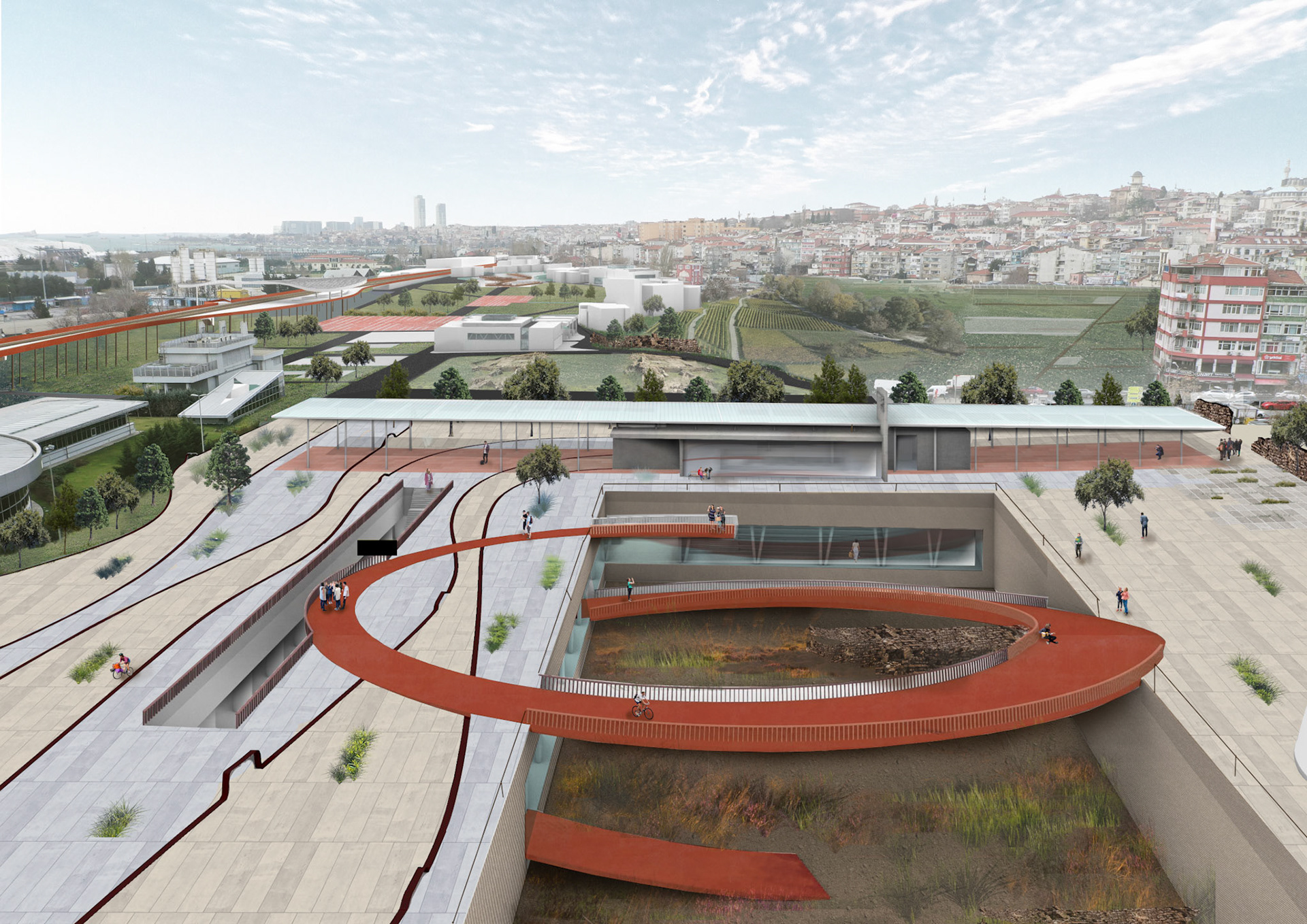
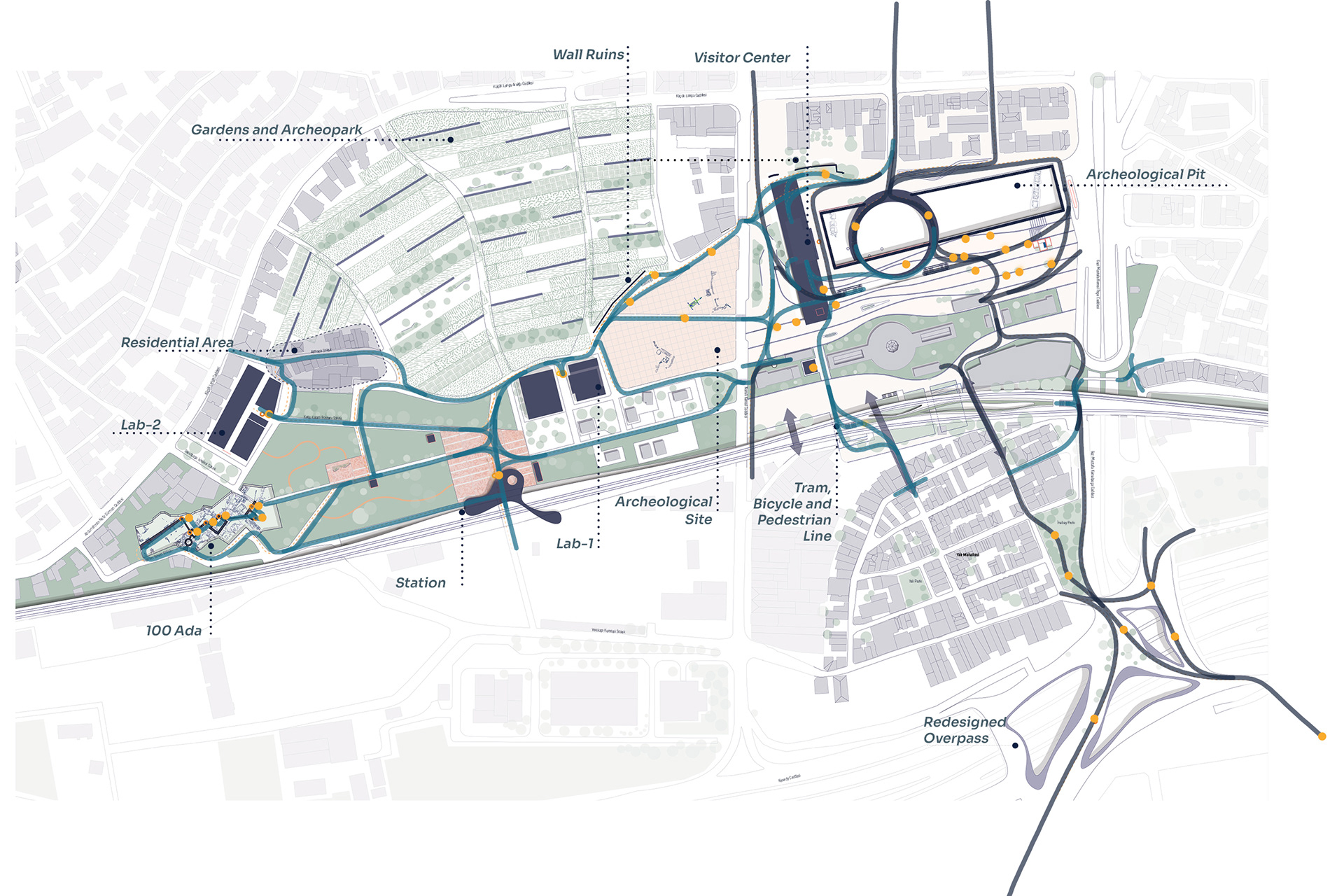
DESIGNING VIEWPOINTS WITH PEDESTRIAN FLOWS AND STOPS
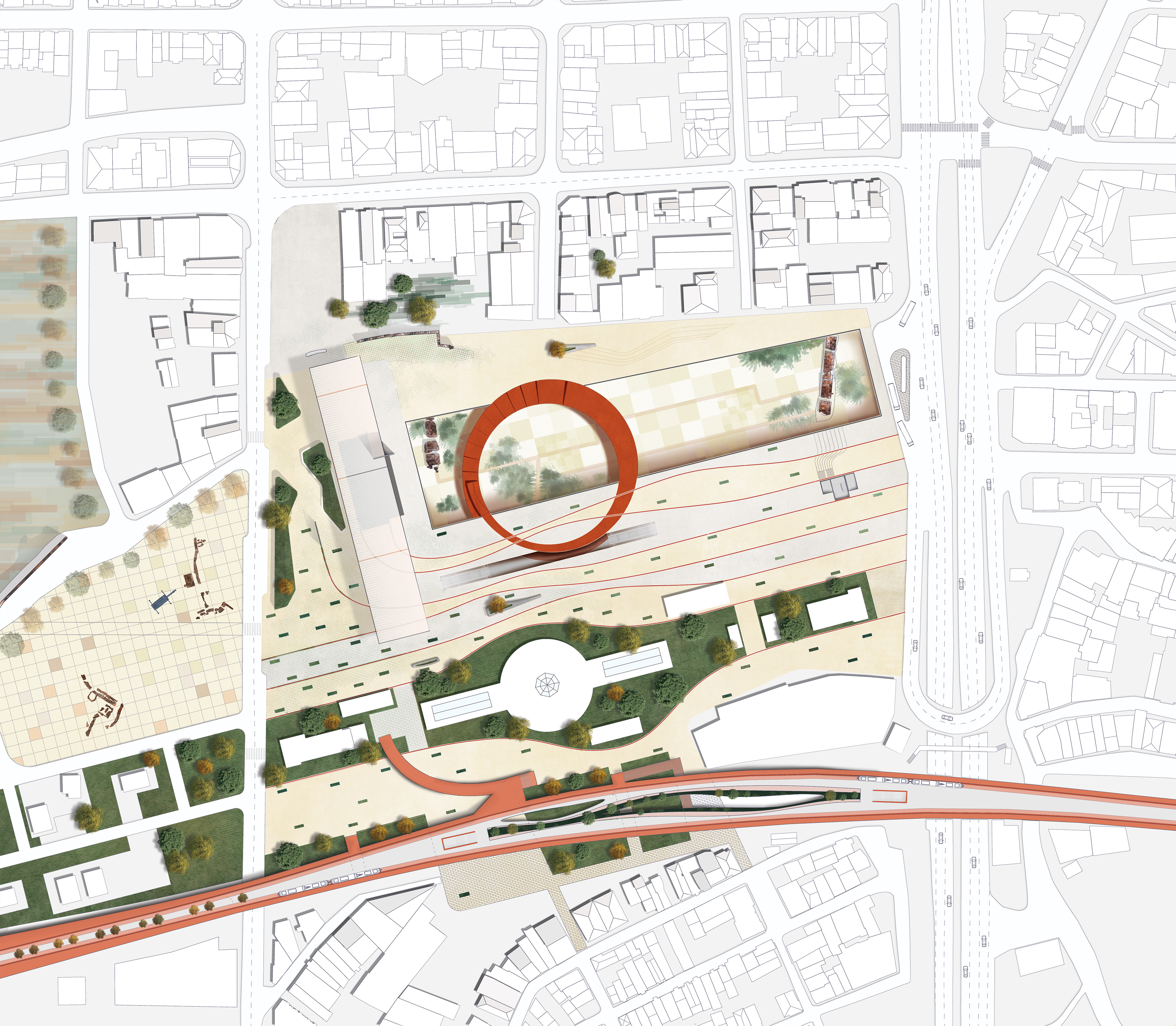
The project centers on revitalizing the urban dynamics of the historically significant area linking Yenikapı and its environs. By enhancing pedestrian pathways within the neighborhood, the design introduces a pedestrian and bicycle route, enriching the exploration of Theodosius Harbor promenade for residents and visitors alike. The accompanying figure showcases the seamless integration of essential features such as the square, archaeological pit, visitor center, subway, and walls, along with other focal points. Carefully selected stopping points offer diverse viewpoints and experiences, strategically enhancing the overall urban narrative.
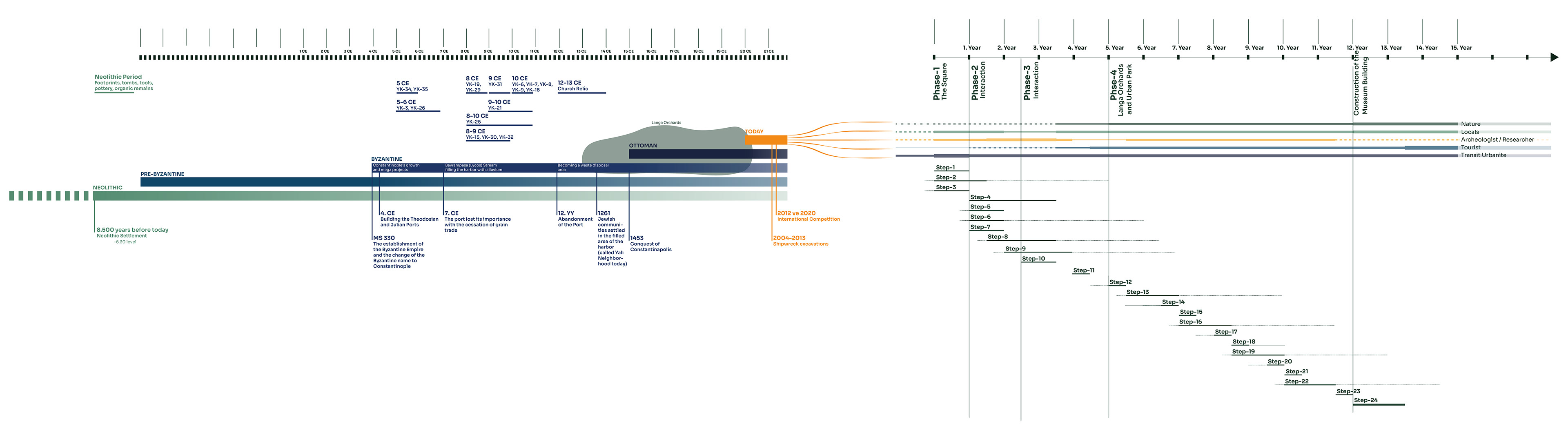
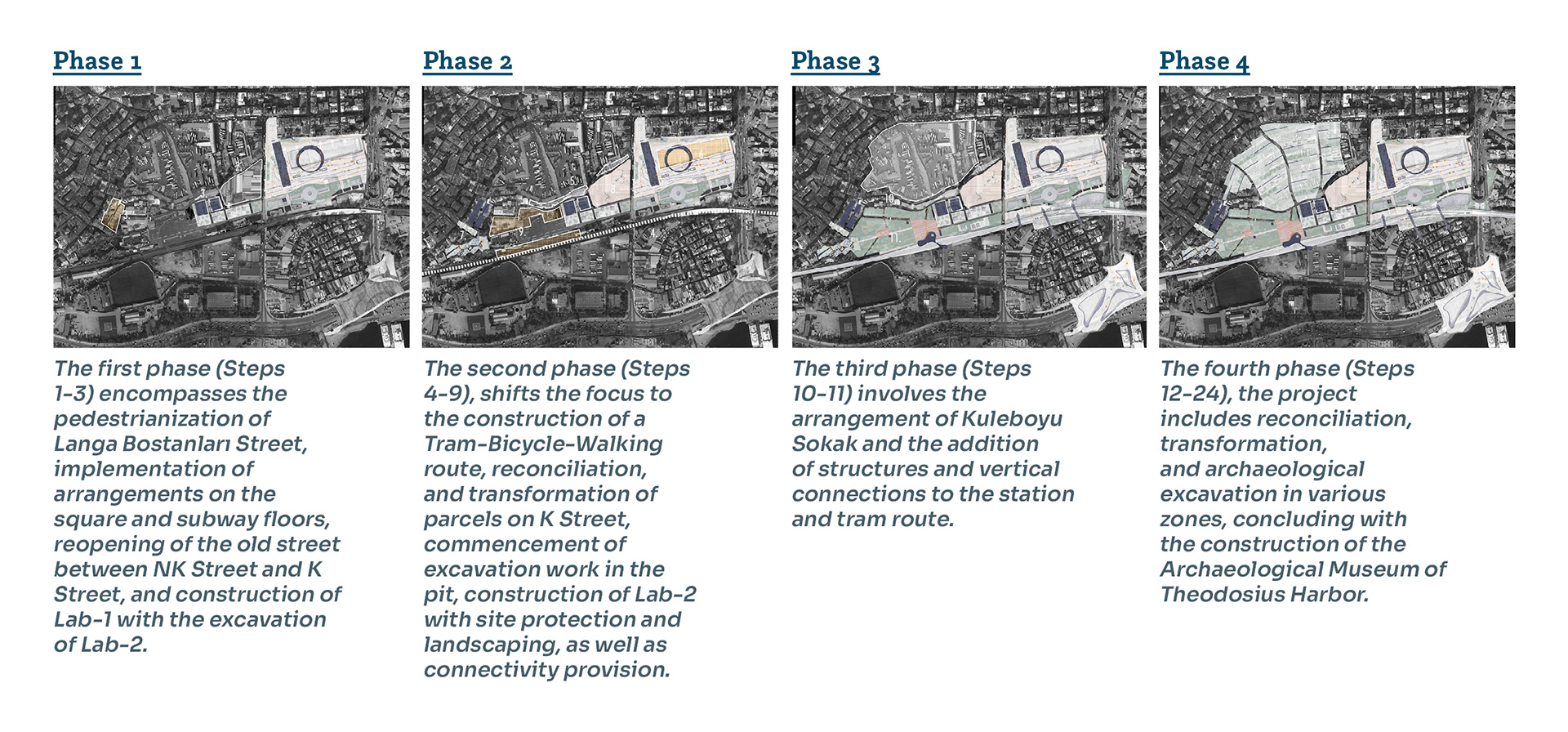
DESIGNING WITH PHASES
The project proposal opts to delineate its progression into four distinct phases, although these phases may occasionally overlap or evolve fluidly into one another. These delineated stages harbor occasional uncertainties and display a degree of permeability. The activities outlined throughout the entire process have facilitated the transformation of these phases into temporal frameworks, serving as a convergence point between time and serendipitous occurrences.
Plan
FAST AND SLOW SQUARE DESIGN CONCEPT
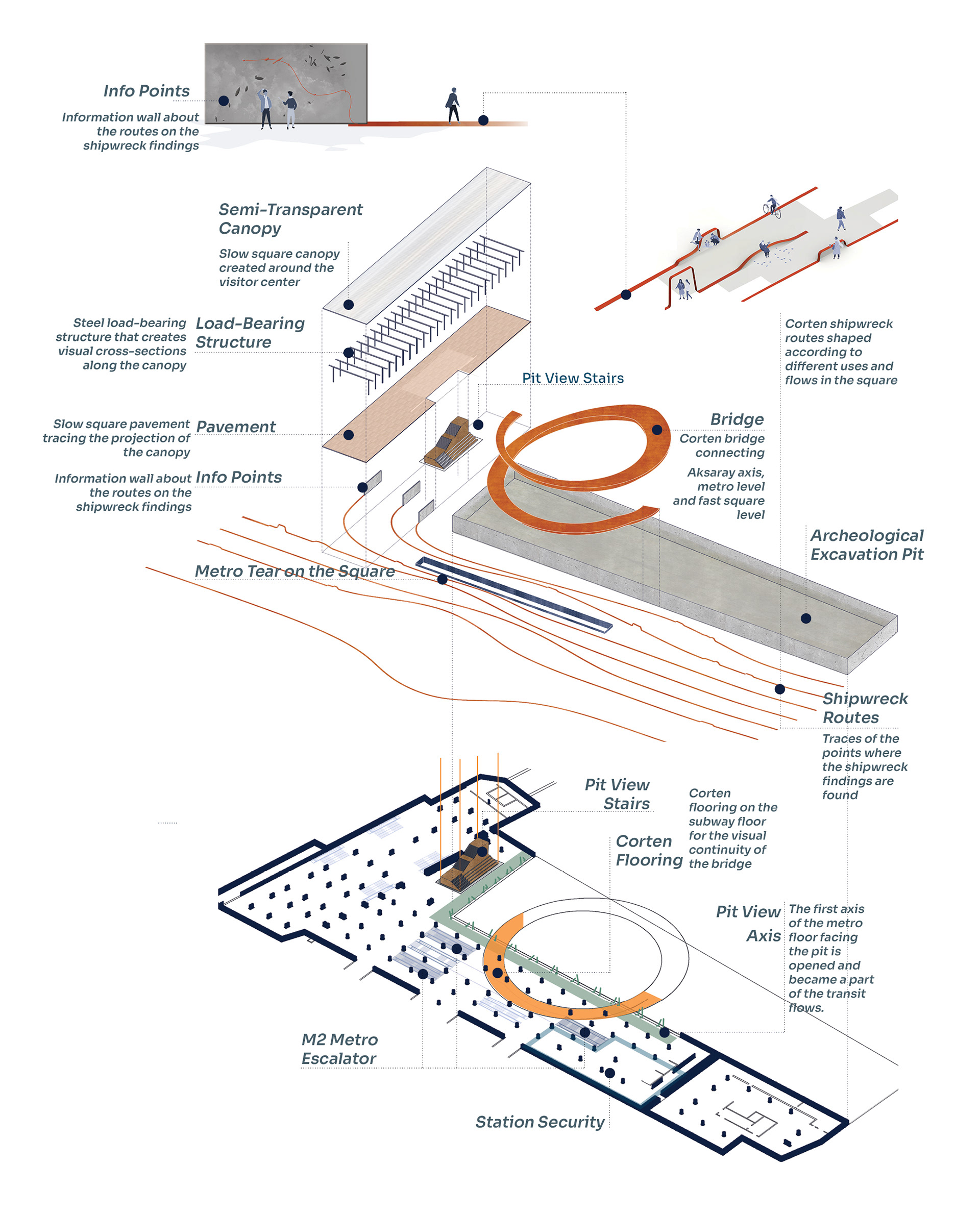
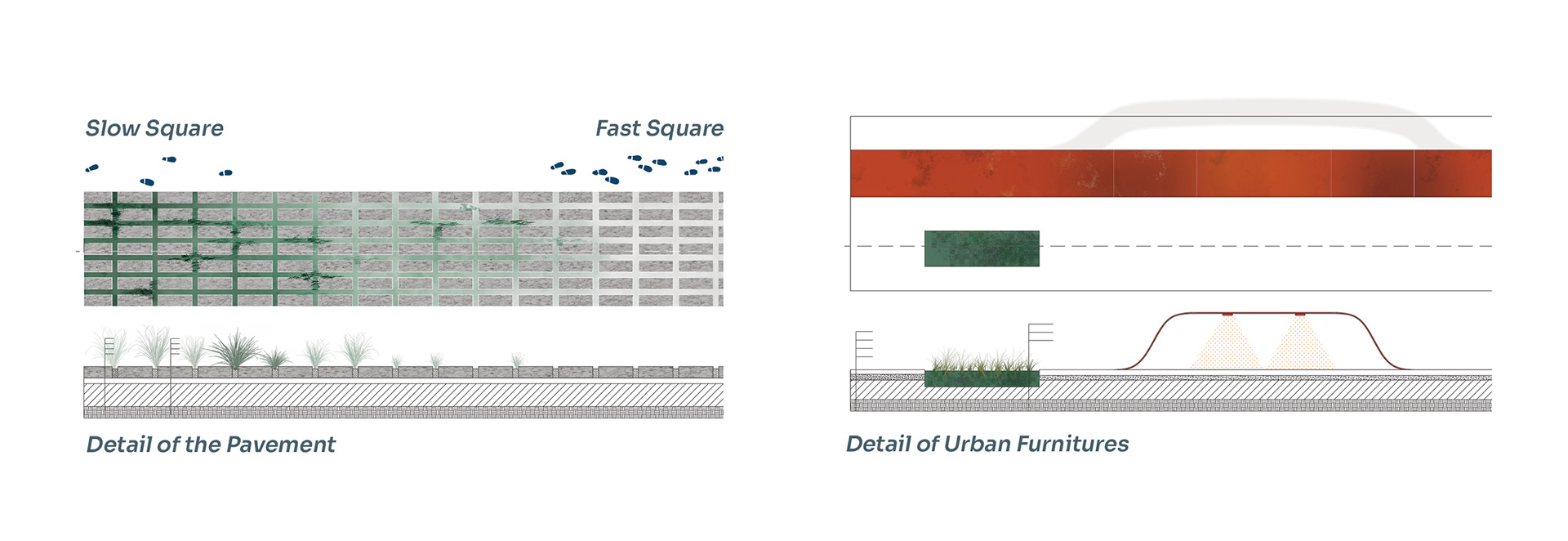
"The redesign at the square level involved reconfiguring existing subway entrances, resulting in a continuous floor tear running parallel to the archaeological excavation pit. This tear illuminates the subway floor and divides the square into two distinct sections along the east-west axis. In the western section, a separate tear provides direct access from the metro level to the visitor center. The eastern area, designed for transit passengers, is designated as a 'fast square,' while the western part functions as a 'slow square,' offering access to research laboratories and the visitor center. Landscaping within the square strikes a balance between hard surfaces and green elements, catering to various activities in both fast and slow areas. Furthermore, the proposal entails pedestrianizing the street above the excavation pit, serving as an intersection area between the fast and slow squares to enhance connectivity.
CRAFTING THE CONSERVATION LABORATORY
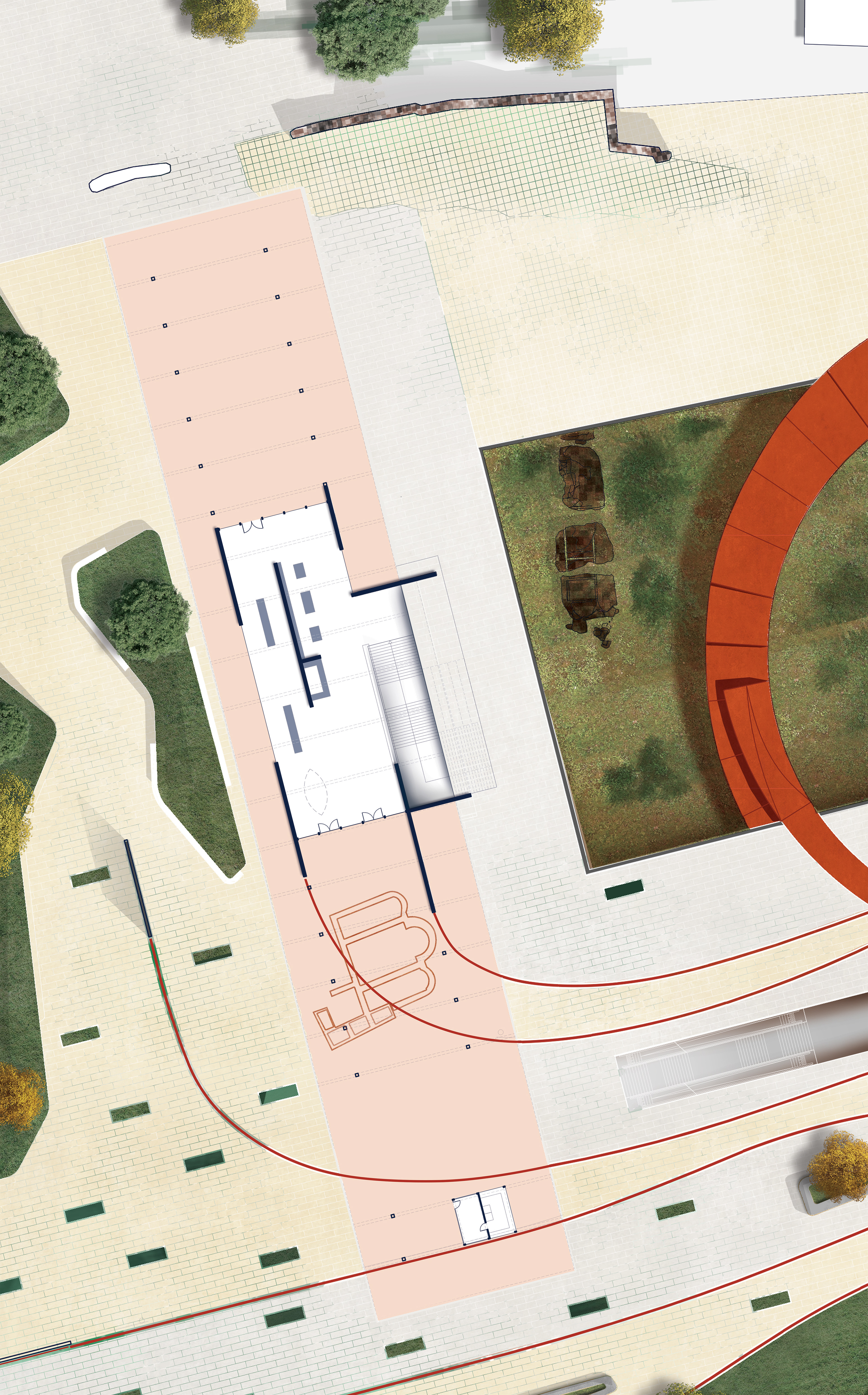
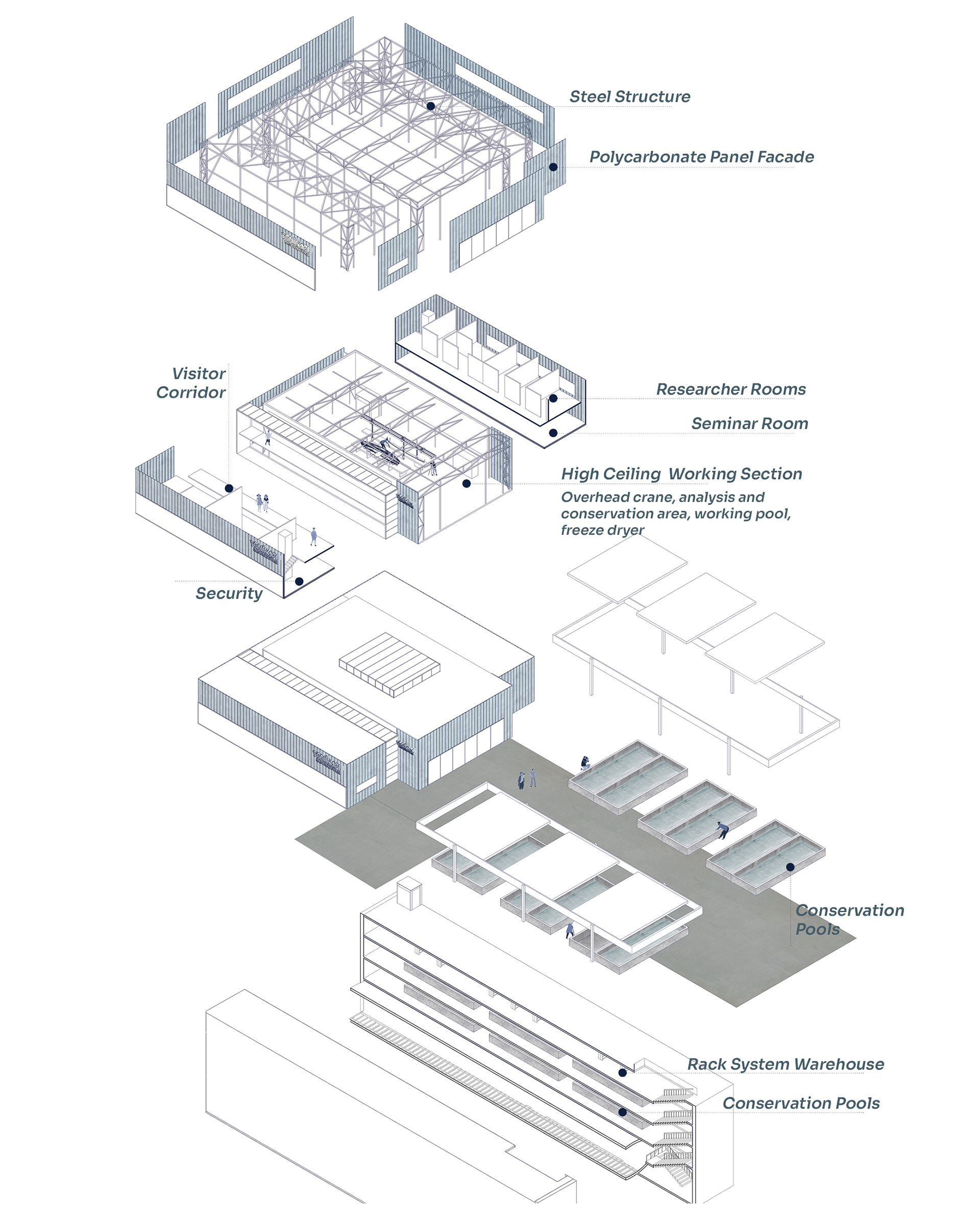
Extensive research on shipwreck removal, preservation, restoration, and storage processes informs the design of a versatile structure serving as both a study area and a center for monitoring works. Constructed with a steel framework to suit its temporary nature, the design features a main working section with a high ceiling, supplemented by two attached masses.
STRATEGIES